
Words, words, words
Strong resistance to AI among writers is understandable. But it obscures what we share with the machines: language itself

Dear Subscribers,
This week’s essay, which looks at AI from an arts and humanities perspective, is published in cooperation with Aeon Magazine, so I’m asking you to click over to read it on their site further below.
Since the essay was published there two days ago, it has garnered lots of reactions, many quite vehement (if you enjoy blood sports, click here). I’m tempted to say that these reactions confirm the essay’s diagnosis of AI resistance, but one type of reaction took me by surprise: several people who hated my argument attacked it by claiming that it was written by AI. I’ve come to believe that this mode of attack is actually quite interesting, namely a new species of the ad hominem fallacy: discrediting an argument by attacking who (or what) wrote it. Let’s call it the ad machinam fallacy. I think we’ll see a lot more of it in the coming years. You've heard it here first.
Actually, I now realize that I myself have been guilty of the ad machinam fallacy by occasionally calling out an essay or post I felt was written by AI. I should’ve focused on the merits of the arguments instead. So, I am hereby starting a campaign against the ad machinam fallacy. (This doesn’t mean we can’t reject AI slop, only that the ad machinam attack is not good argumentative practice.)
And now, please enjoy the essay, which was written, I swear, with loving attention to detail by yours truly (but that doesn’t mean my conclusions are correct):
Since artificial intelligence went mainstream a few years ago, it has done double duty as a political personality test: tell me what you think about AI, and I’ll tell you who you are. Those worried about climate change focus on energy consumption. Those who denounce late capitalism see it as the ultimate example of corporate monopoly. Those concerned about racism have warned about AI biases. Those studying the effects of colonialism see it as yet another form of exploitation. And those tending toward doom have seen ChatGPT, Claude, Gemini and Grok as the four riders of the apocalypse.
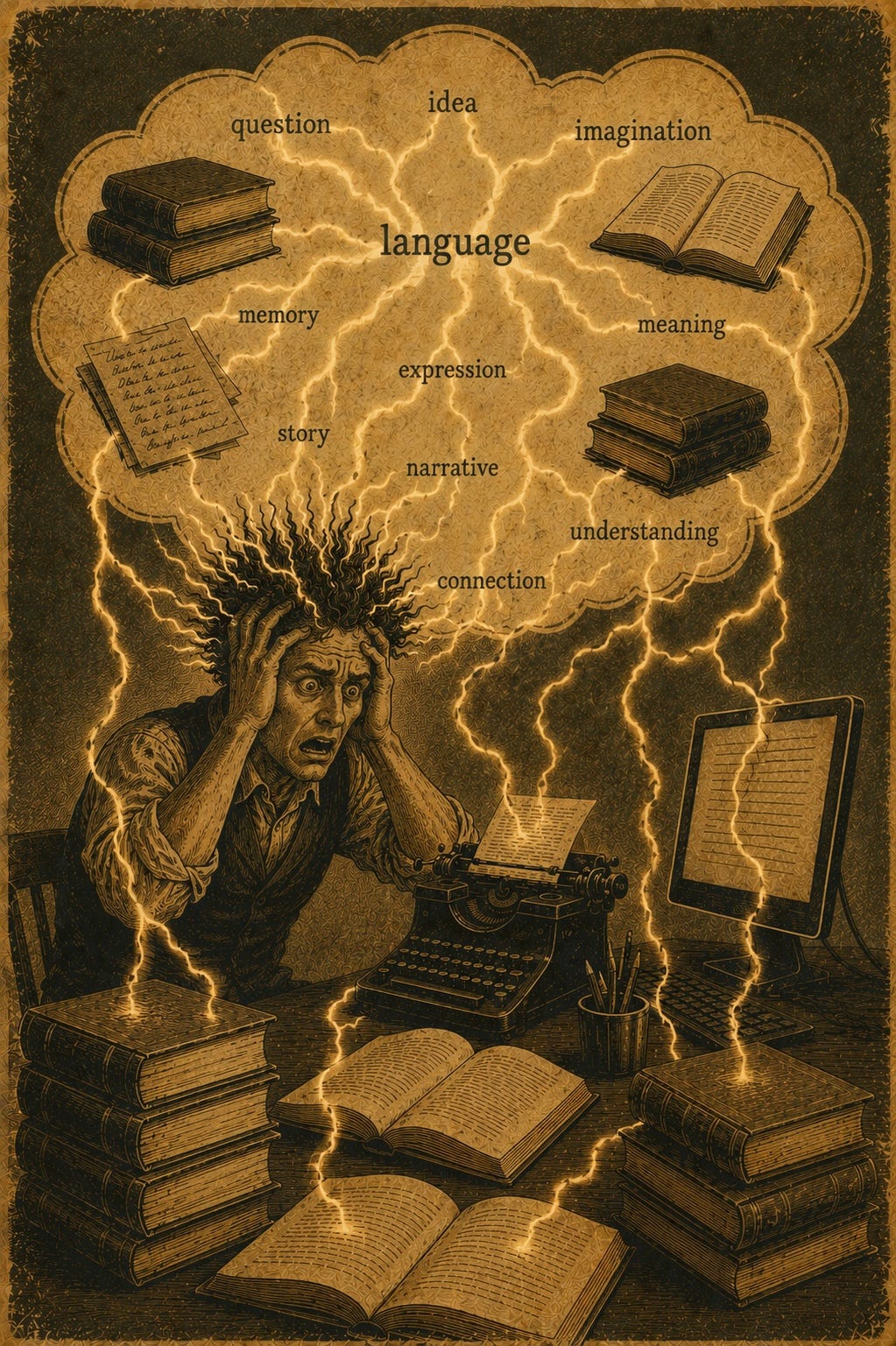
People in the arts and culture have felt particularly threatened by AI because the technology seems to be coming for the things they cherish the most: the creative use of images, words, and ideas. The latter two, words and ideas, have been in the centre of the storm because generative AI is based on language and because ideas are closely associated with the words in which they are expressed. In response, writers have largely opted for resistance, defending the genuine creativity of humans against the machines. My social media feeds have been flooded with AI-slop gleefully produced and circulated by colleagues hoping to prove that AI can’t be creative. Let’s call this the Creative Resistance.
Please continue reading this essay by clicking over to the Aeon site.
The idea of “ad machinam” is fascinating. It reminds me that arguments should be judged by their merits, not by assumptions about who—or what—produced them. More importantly, your essay pushes the conversation back to language itself, which may be the deeper question.
Just an added remark or two about your nice Aeon essay yesterday...
FWIW, I'm pretty sure that a lot of the confusion and anger over AI stems from the fact that most of us in the general public are completely incompetent at thinking about thinking. We aren't prepared for it by education or custom and we're rarely rewarded for it with economic incentives. Worse, because we carry both personal and class-based sensitivities about our intellectual abilities, any serious discussion risks giving unintended personal offence.
Consequently, this crucial "AI moment" in history finds us broadly unwilling and unprepared to grapple with questions about what constitutes reason and creativity and how they ought to be evaluated and valued. It's an excruciating irony and unfortunately it coincides with a political crisis involving the roles of reasoning and evidence in public life.
I've always been surprised by the broad indifference to cognitive psychology. You could spend half a lifetime reading the painstaking demonstrations of how often and how badly even the brightest among us go wrong in our thinking. I was first led to that material when, as a youngster working in a neuroscience lab, I often saw my talented and eminent elders fight like badgers in a sack over the meanings of eccentric data points. How likely is it, I asked myself, that convoluted arguments over ill-defined philosophical terms ("Sein" and "Dasein", anybody?) are likely to be resolved satisfactorily when brilliant and disciplined minds can't make sense of simple empirical statements that have specific physical referents?
Many of my friends in the humanities still have not, I think, fully appreciated the seriousness of the problems in that domain. And to be even-handed about it, a lot of the folks I know in science and engineering are at sea in a different but no less disturbing way, confronting deep issues of consciousness and volition as if they were new problems arriving without hundreds of years of philosophical baggage.
It's a mess that's well beyond me to untangle. In a different era all this would only be of interest only to handful of specialists, but I'm very much afraid that the social, economic, and political pressures converging right now will end in real damage to real people.