
Unnatural Selection
How the Galápagos Islands Became a Laboratory of Our Future

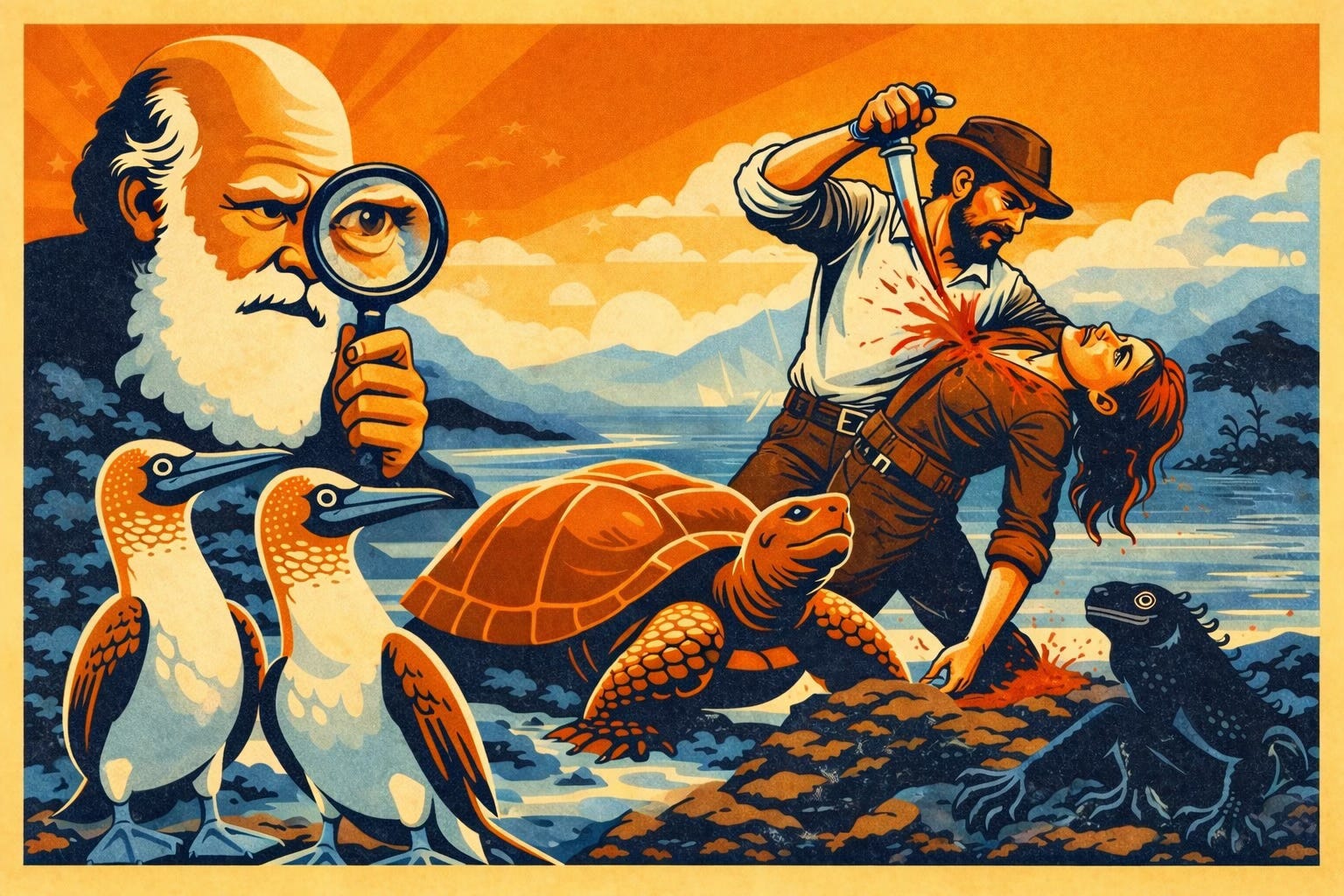
For most of history, the Galápagos Archipelago, located some 600 miles off the coast of Ecuador, was ignored by humans. The first of our species to set foot on these islands were sailors aboard a Spanish vessel blown off course in 1535. They found that only a few islands had fresh water and none offered much in the way of food except for giant tortoises. For the next several hundred years, fresh water and tortoise soup remained the only attractions for the occasional ships that stopped for provisions. From time to time, British pirates would anchor and set up improvised settlements, forming the islands’ indigenous population, and whalers would pass through on the hunt for sperm whales, then a major source of fuel before the age of oil. When, in 1832, Ecuador annexed the islands, no one batted an eye. Nor did anyone particularly care when the United States briefly established a naval base during WWII. The islands simply weren’t important enough to matter.
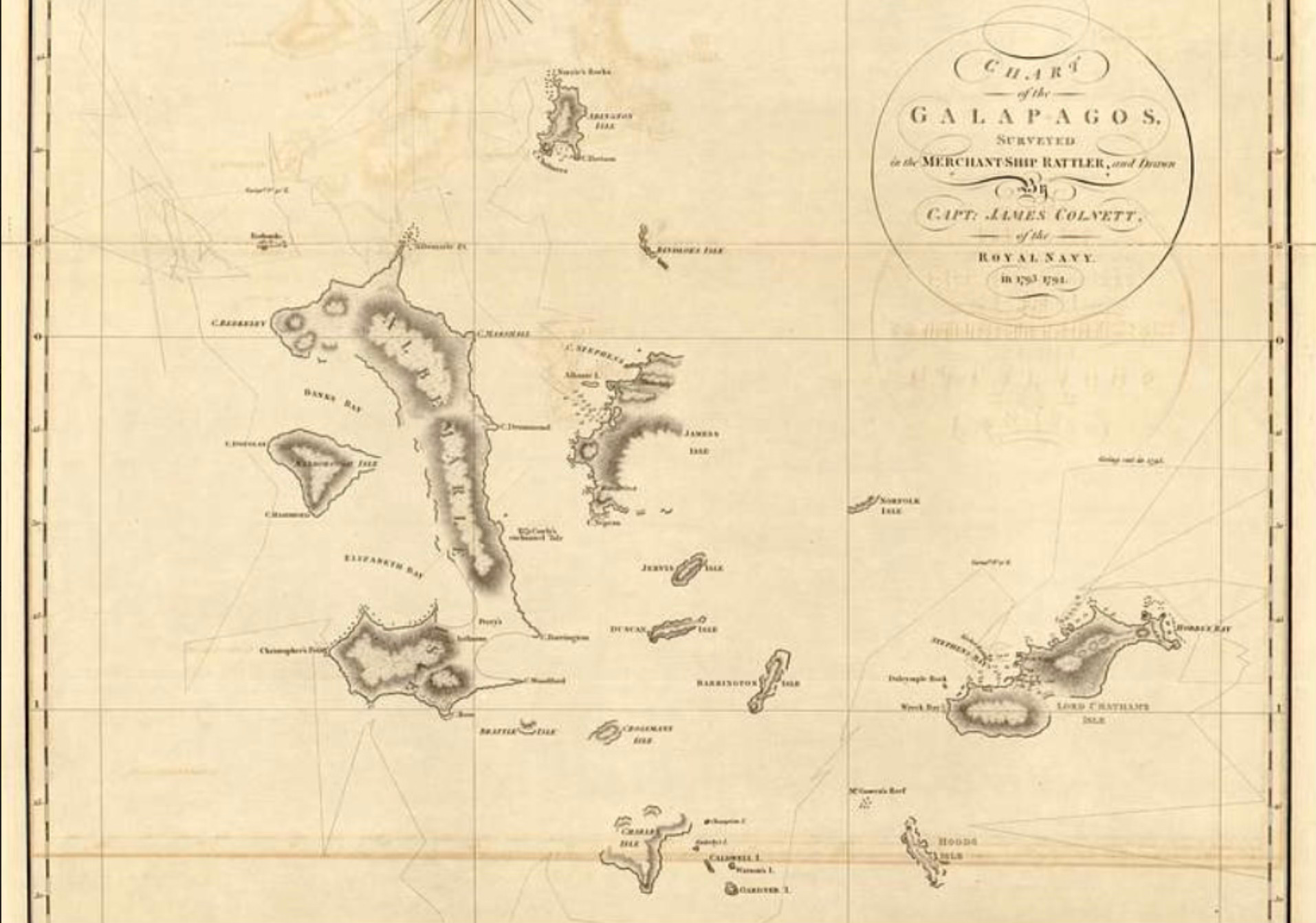
And yet, the Galápagos Islands have come to ignite the imagination, a travel destination that draws visitors by suggesting it is special, that it matters for the world. Part of the attraction is that this archipelago is so remote, isolated in the vast Pacific Ocean, but that is not all. Galápagos is a place charged with meaning and significance—a place that matters.
The person who set this transformation in motion was the young Charles Darwin, who encountered Galápagos in September of 1835 aboard the Beagle. He was not impressed:
Nothing could be less inviting than the first appearance. A broken field of black basaltic lava, thrown into the most rugged waves, and crossed by great fissures, is everywhere covered by stunted, sun-burnt brushwood, which shows little signs of life. The dry and parched surface, being heated by the noon-day sun, gave to the air a close and sultry feeling, like that from a stove: we fancied even that the bushes smelt unpleasantly. Charles Darwin, The Voyage of the Beagle, chapter XVII.
Having expected a tropical paradise situated on the equator, Darwin found a harsh world made of sharp volcanic rock and inhabited by relatively few species. Entire classes, such as mammals, were missing except for sea lions, which had effectively decided to become fish again.
Once Darwin had gotten over his disappointment, he realized that the islands’ very poverty was actually an advantage. It allowed him to focus on the few species that actually existed and observe them more closely. They all resembled species from the mainland, suggesting that they had migrated there at some point rather than being created in situ, as the prevailing theory had it. And once those species had migrated to Galápagos, they must have been forced to adapt to much harsher conditions. After Darwin returned home and brooded over what he had encountered, he realized that Galápagos was like a laboratory of evolution, which helped him work out his theory of natural selection.
This, too, might have been the end of the story, with Galápagos becoming a minor curiosity in the annals of science, like the site of Kepler’s telescope or Freud’s consulting rooms in Vienna—fun facts for historians and pilgrimage sites for occasional enthusiasts, nothing more.
How then did the Galápagos Islands become more than a random stop on Darwin’s itinerary? It’s a process that began with what might be called a migration of meaning by which the islands shifted from being the place where Darwin happened to figure out his theory of evolution to becoming a place considered crucial for evolution itself. Visitors could come here to observe evolution at work by looking at the islands’ species through Darwin’s eyes.
There is no strict logical reason for this. Evolution can, in principle, be observed everywhere equally. Darwin himself would likely have developed his theory of natural selection even if he had never set foot on Galápagos, just as Alfred Russel Wallace arrived at similar conclusions by studying a completely different archipelago, in Malaysia. But this migration of meaning suggests that something special is going on here, as if not only Darwin, but evolution itself, neededthe Galápagos Islands and that coming here, you can somehow observe not just the origin of Darwin’s theory but the origin of evolution itself.
This process happened over time, as Darwin’s theory of evolution became more broadly accepted and more firmly attached to these islands. Another crucial step in this process occurred when, in 1959, the Ecuadorian government turned the islands into a national park. Many islands were declared off limits to humans entirely and habitats for endangered species were restored. Galápagos began to brand itself as an exemplar of eco-tourism, the place where a new relationship between humans and nature was being established.
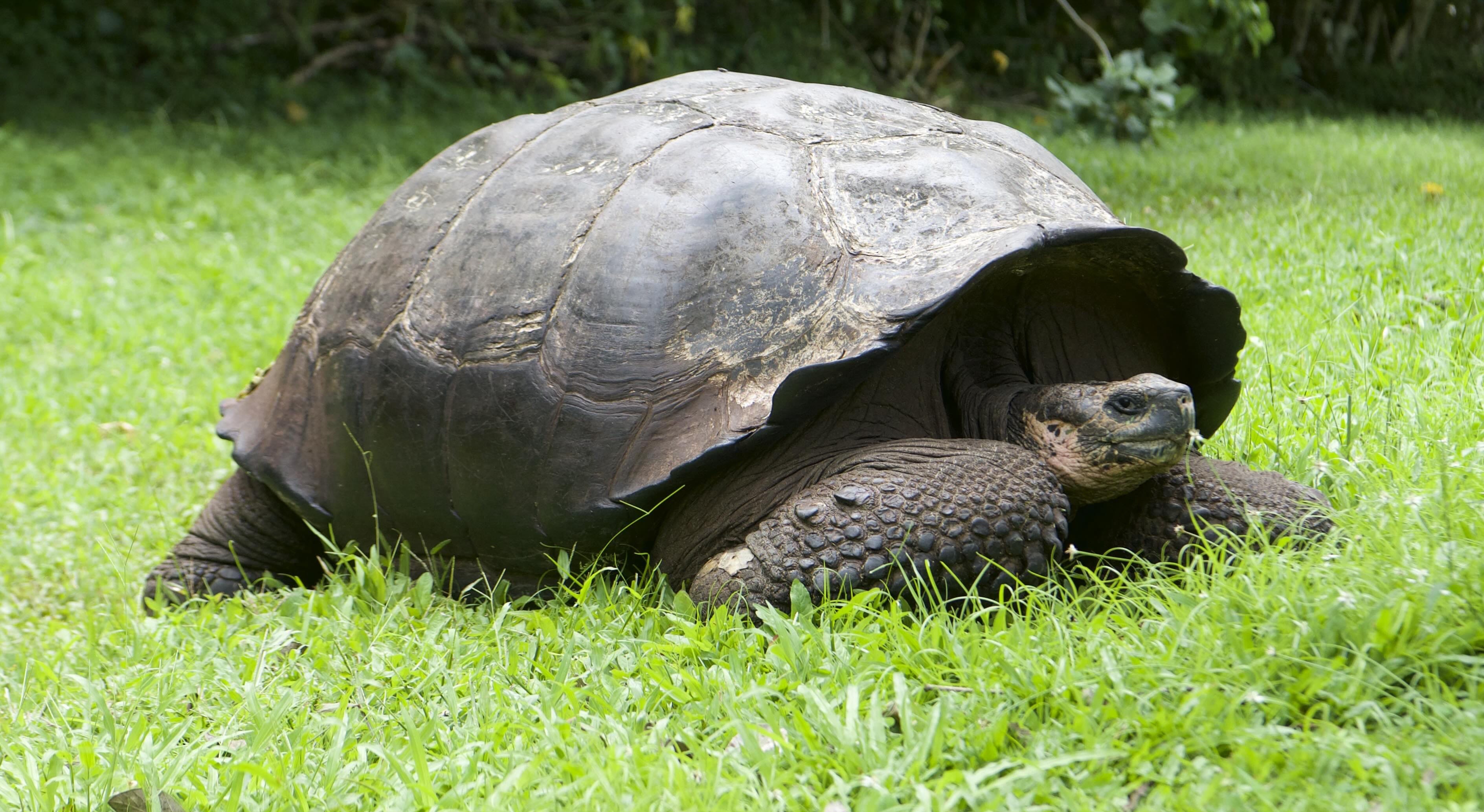
During my recent visit, we were advised not to touch anything, including the animals, in order to minimize human intervention. However, it became clear very quickly that this idea of untouched nature was highly artificial. Invasive species such as rats and cats are everywhere being trapped and exterminated. Cactuses are planted so that the islands’ iguanas (Conolophus subcristatus) will eat them rather than saplings of trees or, heaven forbid, the eggs of the blue-footed booby (Sula nebouxii), one of the main tourist attractions. And this is nothing compared to what is being done to the giant tortoises (Chelonoidis niger), whose eggs are dug out and put in incubators, where they are kept at a temperature that ensures that they will yield at least 70% females, to maximize reproduction. Galápagos is a giant experiment in creating not nature but a Darwinian theme park of natural selection. In this it resembles nothing so much as Jurassic Park, whose location on an imaginary island in the Pacific was surely inspired by Galápagos as well.
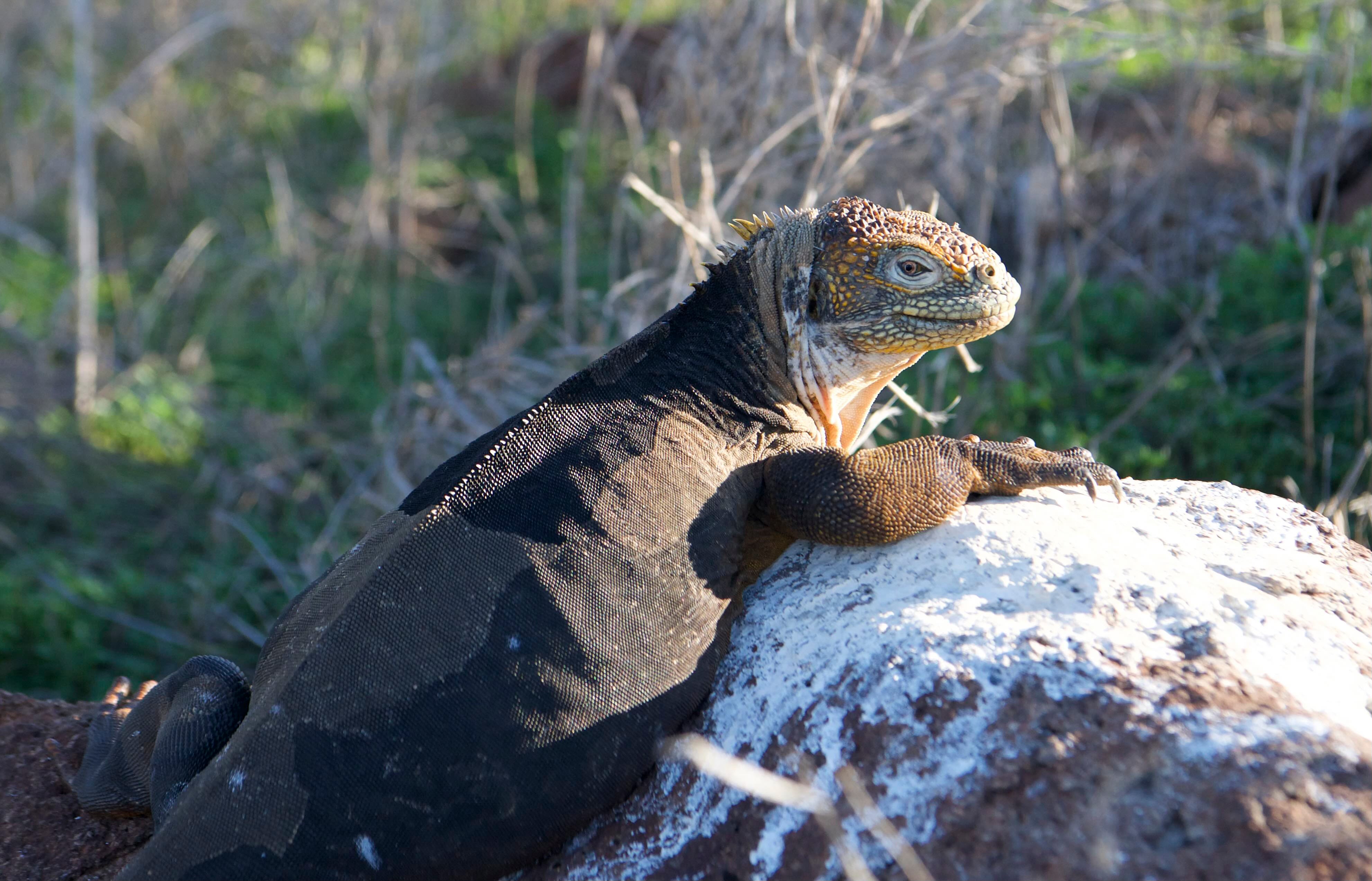
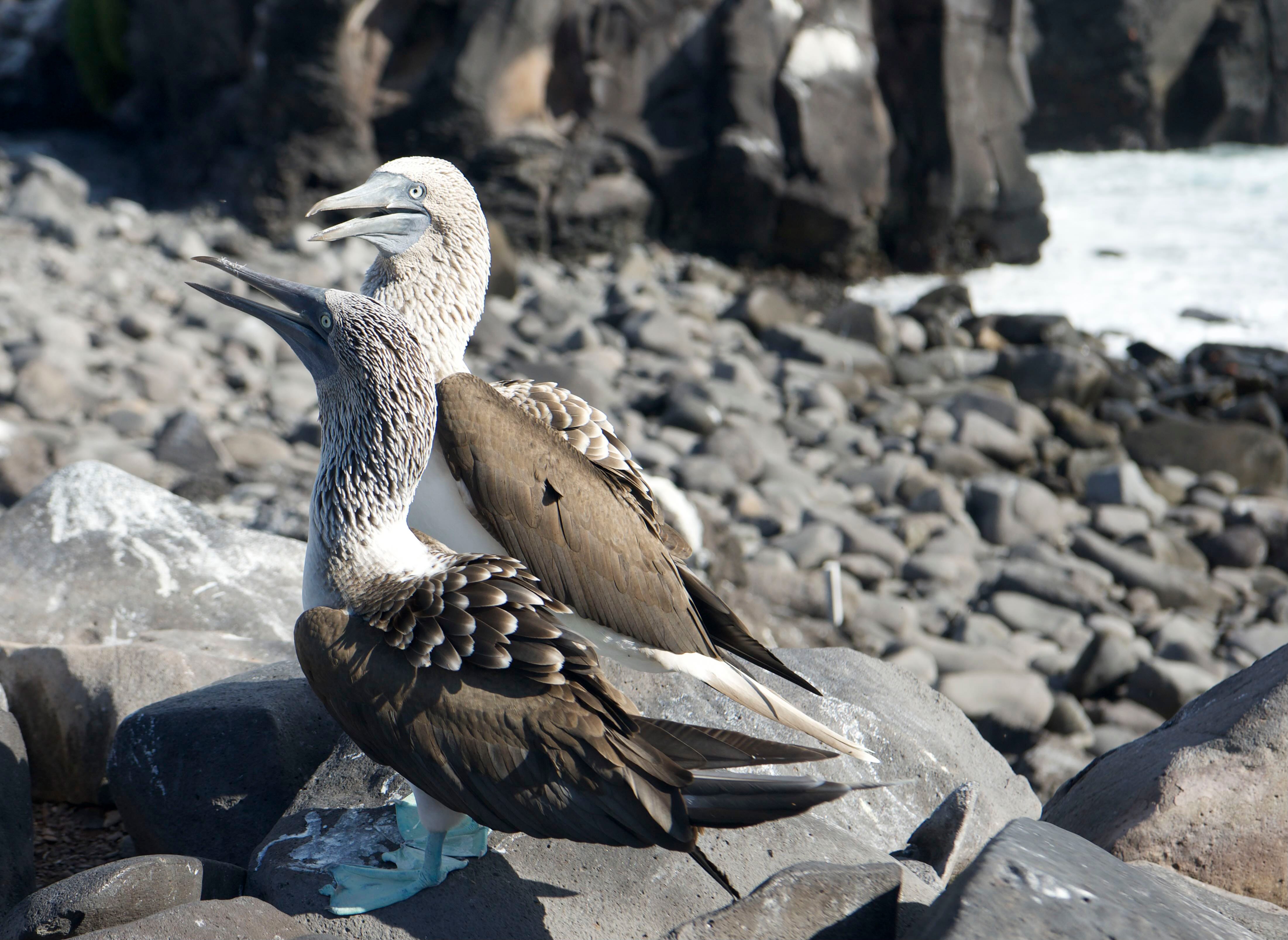
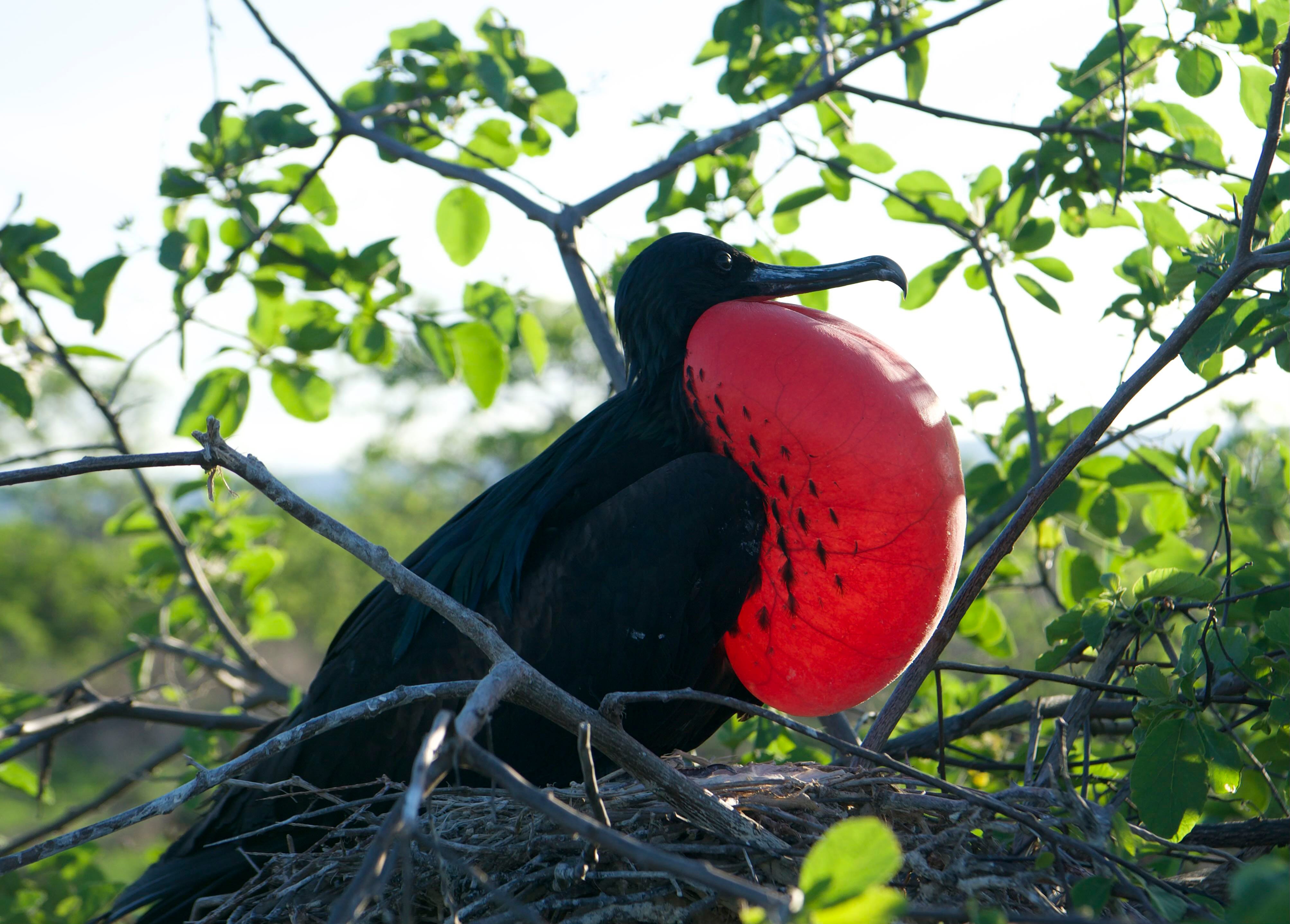
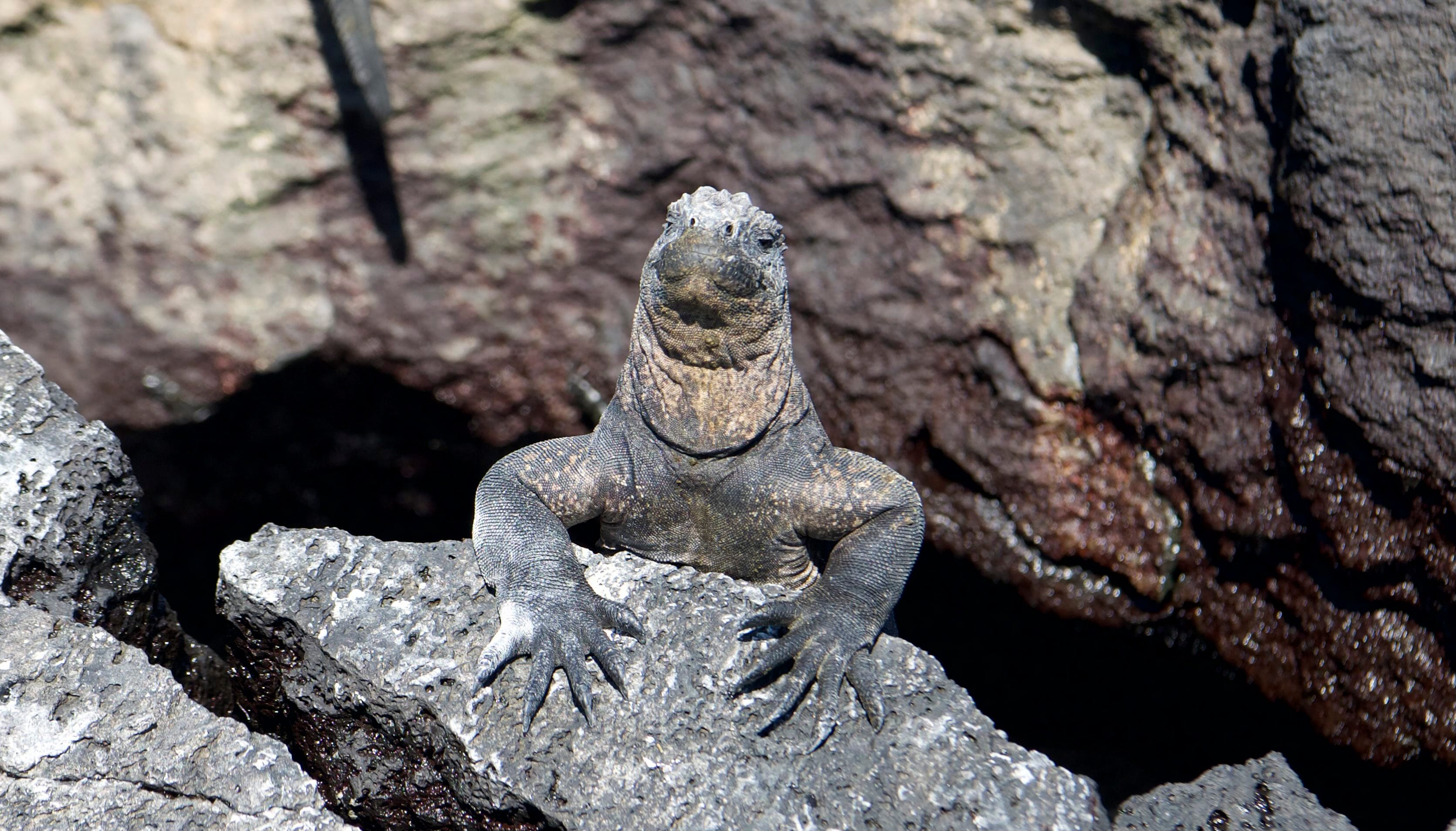
As a place where natural selection can be observed as if in a laboratory, Galápagos also became a project screen for all the ways in which Darwin’s theory is used and abused. Visitors intrigued by sexual selection can admire the red balloons produced by the male Frigatebirds (Fregata magnificens) hoping to attract female mates, or the mating dance of the blue-footed boobies as they show off their ridiculously colored feet to each other, completely oblivious of the groups of humans that are standing right next to them. If, on the contrary, they are more interested in the cruelty of nature and the survival of the meanest, Galápagos offers everything from several species of sharks to aquatic and terrestrial lizards that look at you with pitiless eyes and who would devour you in an instant if only they were as big as dinosaurs.
It isn’t just animals that can be observed in a state of natural selection; homo sapiens sapiens can be as well. This happened as far back as the 1930s, when several Europeans, uprooted by the Great Depression, landed on Galápagos and became, without realizing it, one more test case of evolution. First a German couple landed on Floreana Island, where the Ecuadorian government allowed them to settle, to eke out a living. Soon another family arrived, and finally an eccentric baroness made a grand entrance, flanked by her two lovers. The press became fascinated with the doings of these inhabitants: could Galápagos become a place where humans would figure out how to live in a new way? Alas, the answer was no. The three groups started to fight, one of them was killed, and only one family, the Wittmers, remained, winning this particular Galapagan struggle for survival. On the plus side, the story became the material for a recent Netflix series, Eden (2024), starring Jude Law and Vanessa Kirby.
The person who caught on to these different layers of meaning was the American writer Kurt Vonnegut. Best known for his novel Slaughterhouse-Five, with its grueling depiction of the bombing of Dresden during WWII, which he had witnessed as a prisoner of war, Vonnegut wrote his novel Galápagos with a similarly dark view of humans. Only here, he wanted to depict our destructive capacity on the larger canvas of human evolution, which drew him, inevitably, to Galápagos. The novel takes place against the background of a global economic depression, which is followed by a pandemic that renders women infertile, spelling a sudden end to the human race.
There is one exception, the Galápagos Islands, where a tourist boat becomes a new Noah’s ark, and evolution starts anew. But evolution needs to solve the problems of human destructive capacity, which Vonnegut blames on our giant brains. Over the next million years, natural selection wields its magic as the surviving humans slowly adapt to fishing, which they do by shrinking their brains down to a more hydrodynamic form. Their opposable thumbs, which along with brain power had brought so much mischief into the world, are turned into flippers. This way, humans can now compete with sea lions, fellow mammals optimized for diving and catching fish. The rest of the time, humans are just hanging out on lava rocks, doing no one any harm.
Strikingly, Vonnegut’s evolutionary fantasy includes AI. By 1985, humans have invented a hand-held device that offers immense knowledge in a patronizing tone of smug knowingness. Medical advice is freely given and often ignored. The device also offers resonant quotes from world literature that are utterly predictable and banal. One character gives up on her beloved hobby of arranging flowers when she realizes that AI can do it much better at the push of a button. It’s all part of the giant brain problem, which evolution, or rather Vonnegut, solves by sending the last surviving AI device into the ocean. Galápagos is where humans, that most invasive of species, have come to die.
I don’t quite share Vonnegut’s dark view of humanity, nor his dismissal of AI, however prescient he may have been about some of its effects. But Vonnegut caught on to the fact that Galápagos has become a focal point, a place where we hope to see the history of the world, from volcanic eruptions to evolution, as in a laboratory and where we need to figure out a new path into the future.
In this, it reminded me of the remote mountain monastery I had visited last summer in Bhutan called The Tiger’s Nest (which I wrote about in an earlier post). During that visit, I had met the writer Kinley Dorji, who describes in his book Within the Realm of Happiness how the monastery came to be seen as a nye, using a Bhutanese term that combines the idea of nerve centers in the human body, as used in acupuncture, with that of a sacred site. Even though the Galápagos Islands are not a religious site and are located far from Bhutan, a landlocked mountain kingdom halfway around the world, I have come to think of them as another nye of the world, a nerve center where the past and the future of humanity converge into a single point.
From Darwin to Vonnegut! Especially digging the graphic on this one too. 🫢
There’s a strange loop here: the more carefully an ecosystem is managed to appear untouched, the more dependent it becomes on that very control. At some point, “nature” becomes just another word for a system we’ve decided to maintain.